Both work — but the right choice depends on your specific bite, your lifestyle, and how well you’ll wear a removable appliance. Invisalign and braces are both excellent orthodontic treatments, and at Aubrey Barrett Orthodontics, we use both every day. This page breaks down the real differences so you can walk into your consultation already knowing the right questions to ask.
How Invisalign and Braces Actually Work
Understanding the mechanics helps you compare them honestly — not just on aesthetics, but on what each one can and can’t do.
How Invisalign Works
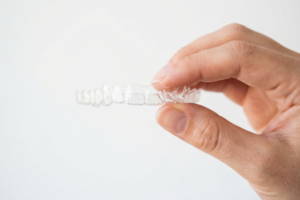
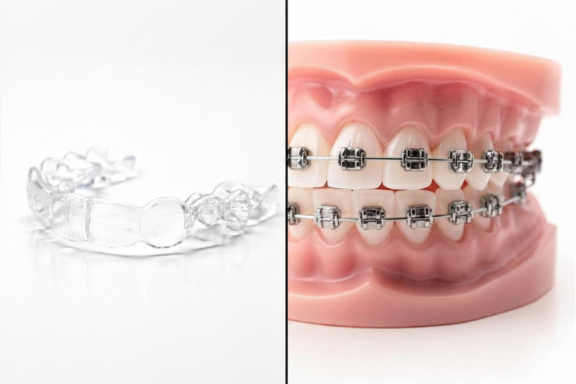
Invisalign uses a series of clear, custom-fit plastic trays — called aligners — that you swap out roughly every one to two weeks. Each tray moves your teeth incrementally toward the final position. You wear them 20 to 22 hours a day and remove them to eat, drink anything other than water, and brush your teeth.
At our El Cerrito and Pittsburg offices, we use iTero digital scanning to create your aligner series — no messy impressions. The scan maps your teeth precisely and lets us show you a digital preview of your projected results before treatment starts. Learn more about Invisalign at our practice.
How Braces Work
Traditional braces use brackets bonded to each tooth, connected by an archwire that applies steady, controlled pressure to move teeth over time. We adjust the wire at regular appointments, and rubber bands or other auxiliaries are added when needed to correct bite issues. Metal braces are the most common type, but ceramic braces — which use tooth-colored brackets — are a popular option for patients who want something less visible. See all the types of braces we offer.
Because braces are fixed to your teeth, they work around the clock whether you think about them or not.
Invisalign vs. Braces: Side-by-Side Comparison
| Factor | Invisalign | Braces |
|---|---|---|
| Visibility | Nearly invisible | Noticeable (metal); subtle (ceramic) |
| Removability | Remove for eating & brushing | Fixed for duration of treatment |
| Comfort | Smooth plastic; no brackets | Brackets can irritate cheeks initially |
| Oral hygiene | Easy — brush & floss normally | Requires more care around brackets |
| Compliance | High — must wear 20–22 hrs/day | Low — fixed to teeth |
| Effectiveness | Excellent for mild–moderate cases | Handles complex cases & severe bites |
| Appt. frequency | Every 6–10 weeks (with digital monitoring) | Every 6–8 weeks |
| Dietary limits | None — remove to eat | Avoid hard/sticky foods |
| Treatment time | 6–18 months (varies by case) | 12–24 months (varies by case) |
| Cost | Comparable to braces; varies by case | Varies by case and type chosen |
One thing worth noting on cost: Invisalign and braces are often closer in price than people expect. The best way to get an accurate picture is at a consultation, where we review your specific case. See what affects the cost of orthodontic treatment. Both options are also eligible for flexible financing with interest-free plans at our office.
Which Is Better for Teens?
Teens are the most common Invisalign patients — and for good reason. Invisalign Teen is designed specifically for adolescent patients, with compliance indicators (a small dot that fades with wear, so parents can check) and extra replacement aligners built into the series.
That said, braces are often the stronger recommendation for teens who:
- Have complex bite problems — significant overbites, underbites, or severe crowding
- Are honest with themselves that they won’t consistently wear aligners for 22 hours a day
- Participate in contact sports and prefer not to remove aligners before every practice
For teens with mild to moderate alignment issues and the discipline to wear their trays consistently, Invisalign works beautifully. We treat a lot of East Bay teens with Invisalign — it fits well into school and social life when wearing habits are solid. Learn more about teen orthodontics at our practice.
Which Is Better for Adults?
Adults are some of the best Invisalign candidates. Most adult patients have moderate alignment needs, strong compliance habits, and a clear preference for discretion — Invisalign checks all three boxes.
Adults also tend to appreciate the lifestyle flexibility: no food restrictions, easier oral hygiene, and the ability to remove aligners for presentations, photos, or special events. One of the features our adult patients specifically mention is our digital monitoring technology, which reduces the number of in-office visits needed — useful for busy schedules.
Braces remain an excellent option for adults with more complex cases. Ceramic braces in particular are popular with adult patients who need the precision of fixed treatment but prefer something less conspicuous than metal. Learn more about adult orthodontics — it’s never too late.
What About Kids?
For most children under 11 or 12, braces are the standard recommendation. Young patients are still growing, their teeth are actively shifting, and fixed appliances give us precise control that’s difficult to replicate with removable trays at that stage. If your child needs early intervention — what we call Phase 1 treatment — palatal expanders or other appliances are often part of the plan before braces or aligners come into the picture. Learn more about kids orthodontics and early treatment.
When Braces Are the Better Choice
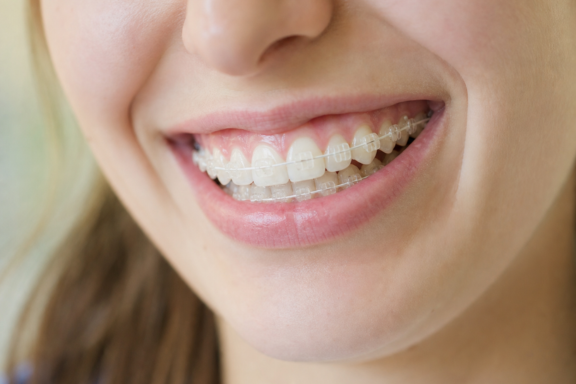
Braces have clear advantages that Invisalign can’t fully replicate, particularly for:
Complex bite problems. Severe overbites, underbites, crossbites, and significant crowding respond well to the continuous, precise force that brackets and wires provide. Dr. Barrett’s research background — her work has been published in the American Journal of Orthodontics and Dentofacial Orthopedics — informs how we approach these cases, and braces remain the gold standard for complex tooth movement. Learn more about the common orthodontic problems we treat.
Compliance isn’t guaranteed. Invisalign only works if the trays are in. For patients who are likely to leave aligners out more than they should, braces remove that variable entirely.
Certain tooth movements. Rotating specific teeth or making precise vertical movements is generally more predictable with braces. We’ll tell you honestly at your consultation if your case is one where braces give us more control.
When Invisalign Is the Better Choice
Invisalign tends to win when:
Aesthetics are a priority. If you or your teen would feel self-conscious in metal braces, that matters. Orthodontic treatment works best when patients feel good about wearing it — confidence is part of the process.
Oral hygiene is a concern. Cleaning around fixed brackets takes effort, and patients with a history of cavities or gum sensitivity often do better with Invisalign’s removable trays and unrestricted brushing.
The case is mild to moderate. Invisalign has advanced significantly and now handles a wide range of alignment and bite issues effectively. For many cases, the outcomes are clinically equivalent to braces.
Lifestyle flexibility matters. Athletes, musicians who play wind instruments, and patients who travel frequently often prefer the flexibility of a removable appliance.
How We Help You Decide
The honest answer is that neither Invisalign nor braces is universally better — the right choice is the one that fits your bite, your habits, and your life. At our El Cerrito and Pittsburg offices, we take time at your first visit to review your teeth, your bite, and your goals before making a recommendation. We don’t push one option over the other.
What we do offer: iTero digital scanning at every consultation, so you can see a projected outcome before committing to treatment. We also offer digital monitoring technology for Invisalign patients, which reduces in-office check-in visits — something our Bay Area patients with busy schedules consistently appreciate. If you have a bite issue that concerns you — a significant overbite, crowding, jaw discomfort — it’s worth knowing that Dr. Barrett also treats TMJ and jaw-related issues, which sometimes overlap with orthodontic needs. Not all orthodontists offer that, and it can change the treatment approach.
New patient consultations are free. Book your free consultation or request an appointment online — we look forward to meeting you.
Frequently Asked Questions
Is Invisalign as effective as braces?
For mild to moderate cases, yes — clinical outcomes with Invisalign are comparable to braces when patients wear their aligners consistently. For complex bite problems or significant tooth movement, braces often give orthodontists more precise control. Your orthodontist can tell you which applies to your case at a consultation.
Does Invisalign or braces hurt more?
Neither is pain-free, but they cause different kinds of discomfort. Braces can irritate the inside of your cheeks, especially after adjustments. Invisalign trays create pressure when you put in a new set, which typically fades within a day or two. Most patients rate both as manageable, and discomfort decreases significantly after the first few weeks.
Can teenagers use Invisalign?
Yes. Invisalign Teen is designed for adolescent patients and is one of the most common treatments we provide. It includes compliance indicators and replacement aligners. The main factor is whether the teen will wear the trays consistently — 20 to 22 hours a day is required for treatment to stay on track.
How long does treatment take?
Treatment time varies based on the complexity of your case more than on whether you choose braces or Invisalign. In general, Invisalign treatment ranges from 6 to 18 months for most patients; braces typically run 12 to 24 months. Patients with mild cases often finish faster regardless of which option they choose.
Which costs more — Invisalign or braces?
The cost difference is smaller than most people expect, and it varies based on your specific case rather than the treatment type. Both are eligible for dental insurance (when your plan includes orthodontic benefits) and for our flexible interest-free financing options. See what affects the cost of orthodontic treatment or explore our affordable orthodontic options in El Cerrito and Pittsburg.
Do I need a referral to see an orthodontist?
No. You can book a free consultation directly with our office — no referral from your dentist is needed. Most of our patients come to us after researching their options or being told by their dentist that they’re a good candidate for orthodontic treatment. Learn more about orthodontist qualifications and specialty training from the American Association of Orthodontists.