Phase 1 is early orthodontic treatment that happens before all the adult teeth come in. It typically starts between ages 6 and 10, while the jaw is still growing. Not every child needs it — but for those who do, starting early can prevent bigger problems later.
At Aubrey Barrett Orthodontics, we see parents ask about this all the time. The short answer: Phase 1 treats the jaw and bone structure. Phase 2 treats the teeth. Done together at the right time, the two phases create results that would be much harder to achieve with braces alone.
Why Does Orthodontic Treatment Sometimes Happen in Two Phases?
Most people picture orthodontics as one round of braces in middle school. And for many kids, that’s exactly how it works.
But some children have jaw or bite problems that are much easier to correct while the jaw is still developing. Waiting until all the adult teeth are in — and the jaw has finished growing — means missing a window that nature only opens once.
That’s what Phase 1 is for. It doesn’t replace Phase 2. It prepares the mouth so Phase 2 goes smoother, faster, and with better results.
What Does Phase 1 Treat?
Phase 1 is used for children who have specific structural problems — not just crooked teeth. Common reasons Dr. Barrett might recommend Phase 1 include:
Crossbites. When the upper teeth sit inside the lower teeth, the jaw can shift to one side over time. A crossbite is much easier to correct while the jaw is still growing.
Severe crowding. If the jaw is too narrow to fit the incoming adult teeth, a palatal expander can widen the arch now rather than requiring extractions later.
Underbites. When the lower jaw grows forward past the upper jaw, early intervention can guide the upper jaw to catch up.
Protruding front teeth. Front teeth that stick out significantly are more likely to get chipped or knocked out. Bringing them back early reduces injury risk.
Harmful habits. Thumb sucking, tongue thrusting, and extended pacifier use can change how the jaw develops. Phase 1 can correct the damage before it becomes permanent.
Not sure if your child is showing any of these signs? Our post on orthodontic warning signs walks through what to look for.
What Happens During Phase 1?
Phase 1 is not a full set of braces. The goal is to address specific structural problems — jaw width, bite alignment, or space for incoming teeth.
Common Phase 1 appliances include:
Palatal expanders. These gently widen the upper arch over several months. They work by gradually separating the two halves of the palate while the bone is still soft and responsive. Our palatal expander page explains how they work and what daily care looks like.
Partial braces. Sometimes just the front six teeth get brackets to guide eruption or correct bite issues.
Space maintainers. If a baby tooth is lost early, a space maintainer holds room open so the adult tooth can come in correctly.
Removable appliances. Custom-made retainer-like devices can reposition the jaw or redirect growth.
Phase 1 usually lasts 9–18 months. After that, your child enters a resting period.
What Is the Resting Period Between Phases?
After Phase 1 ends, most children get a break. This is called the resting period, and it can last one to several years.
During this time, the remaining adult teeth continue to come in. Dr. Barrett monitors progress with periodic check-ins — no active treatment, but she’s watching to see how things develop. This is also when retainers may be worn to hold the gains from Phase 1.
What Is Phase 2?

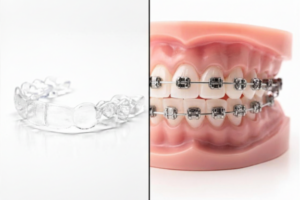
Phase 2 is traditional orthodontic treatment — braces or Invisalign on all the teeth once the adult set is mostly in. This usually starts around age 11–14.
Because Phase 1 addressed the jaw structure and made room, Phase 2 can focus entirely on moving the teeth into their final positions. Kids who had Phase 1 often finish Phase 2 faster than they would have otherwise.
Does Every Child Need Both Phases?
No. Most children only need Phase 2 treatment during their teen years. The American Association of Orthodontists recommends an orthodontic screening by age 7 — not because most 7-year-olds need treatment, but because early screening catches the minority who do before their window closes.
At your child’s first visit with Dr. Barrett, she’ll assess whether Phase 1 is needed or whether waiting and monitoring is the right call.
Phase 1 vs. Phase 2: A Quick Comparison
| Phase 1 | Phase 2 | |
|---|---|---|
| Age range | 6–10 | 11–14+ |
| Goal | Jaw and bone structure | Tooth alignment |
| Appliances | Expanders, space maintainers, partial braces | Full braces or Invisalign |
| Duration | 9–18 months | 18–24 months (often shorter after Phase 1) |
| Who needs it | Children with structural problems | Most orthodontic patients |
What to Do Next
If your child is approaching age 7 — or if you’ve noticed crowding, a shifting jaw, or bite issues — the best next step is a free consultation at Aubrey Barrett Orthodontics. Dr. Barrett completed advanced training at the University of Michigan and her research has been published in peer-reviewed journals. She’ll tell you exactly what she sees and whether Phase 1 makes sense — or whether you can simply monitor and wait.
FAQ
What age does Phase 1 orthodontic treatment start?
Phase 1 typically starts between ages 6 and 10, while the jaw is still growing. The American Association of Orthodontists recommends every child have their first screening by age 7 — not because most kids need treatment that young, but to catch the ones who do.
How long does Phase 1 last?
Phase 1 treatment usually lasts 9–18 months, followed by a resting period while the remaining adult teeth come in. The resting period can last one to several years before Phase 2 begins.
Does my child have to do Phase 2 after Phase 1?
Most children who go through Phase 1 will still need Phase 2 to align the teeth once they’re all in. Phase 2 often goes faster because Phase 1 already handled the structural work.
Is Phase 1 covered by dental insurance?
Coverage varies by plan. Some plans cover a portion of Phase 1 under orthodontic benefits, while others apply a single lifetime benefit regardless of phase. Bring your insurance information to your consultation and we’ll help you sort it out.
What if my child doesn’t need Phase 1?
Most children don’t need Phase 1. If Dr. Barrett doesn’t see any structural problems at your child’s screening, she’ll recommend monitoring and a return visit when more adult teeth have come in.