You want straighter teeth. You just don’t want a mouth full of metal getting in the way.
Good news: ceramic braces give you the results of traditional braces without making your smile look like it’s wearing hardware.
But are they right for you? Here’s everything you need to know before you decide.
What Are Ceramic Braces?
Ceramic braces work exactly like metal braces. They use brackets bonded to your teeth, connected by a wire, to gently move your teeth into the right position over time.
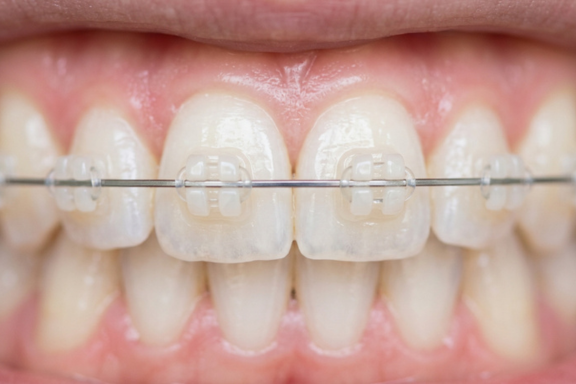
The difference? The brackets are made from a tooth-colored or clear ceramic material instead of metal. That makes them much less noticeable — especially from a distance.
Some patients also opt for tooth-colored wires to blend in even more. The result is a brace that does all the same work but draws a lot less attention.
How Do Ceramic Braces Work?
The mechanics are identical to metal braces:
- Brackets are bonded to the front of each tooth using a dental adhesive
- A wire runs through each bracket, applying gentle, consistent pressure
- Your orthodontist adjusts the wire at regular appointments to keep your teeth moving in the right direction
- Over time, your teeth shift into proper alignment
The only real difference is the material. Ceramic brackets are made from polycrystalline alumina — a smooth, hard material that closely matches the color of natural teeth.
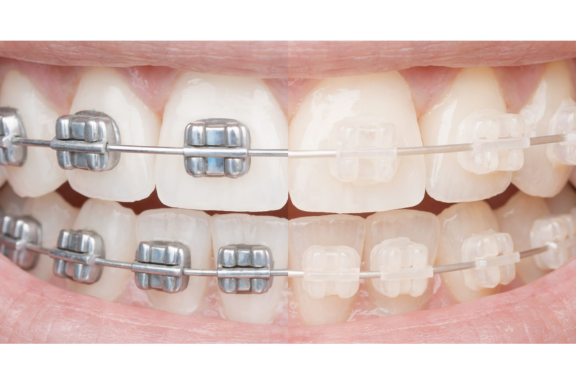
Ceramic Braces vs. Metal Braces: A Quick Comparison
| Feature | Ceramic Braces | Metal Braces |
|---|---|---|
| Appearance | Tooth-colored, much less visible | Silver/grey, more noticeable |
| Effectiveness | Equally effective | Equally effective |
| Durability | Slightly more fragile | Very strong |
| Staining risk | Elastic ties can stain | No staining |
| Cost | Slightly higher | Lower cost |
| Comfort | Smooth surface, gentle on cheeks | May irritate cheeks initially |
Both types of braces do the same job equally well. The choice usually comes down to how much appearance matters to you or your teen.
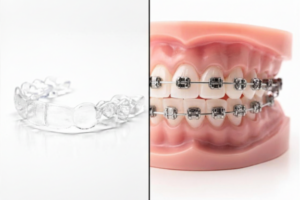
If you’re still weighing your options, our guide to types of braces compares metal, ceramic, and clear aligners side by side — including cost, visibility, and who each one works best for.
The Pros of Ceramic Braces

They’re much less noticeable. The biggest reason people choose ceramic braces is looks. From even a short distance, the brackets blend right into your teeth.
They work just as well as metal. Ceramic braces move teeth with the same accuracy and speed. There’s no trade-off in results.
They’re smooth and comfortable. The ceramic material is smooth and gentle on the inside of your cheeks — many patients find them more comfortable than metal.
That smoother surface also makes the first few days a little easier. If you’re wondering what to expect after getting braces put on, do braces hurt? walks through the adjustment period honestly — including how long the soreness lasts.
They’re great for photos and special occasions. If you have a school dance, graduation, or family event coming up, ceramic braces won’t stand out in pictures the way metal ones do.
The Cons of Ceramic Braces
They can stain. The brackets themselves won’t stain, but the tiny elastic ties that hold the wire in place can pick up color from coffee, tea, or tomato sauce. Your orthodontist replaces these ties at each appointment, so staining is usually short-lived.
They’re slightly more fragile. Ceramic is harder than metal but more brittle. You’ll want to avoid hard or crunchy foods that could chip a bracket.
They cost a little more. Ceramic braces typically run a bit higher than metal braces because of the materials involved. Your orthodontist can walk you through the exact difference during a free consultation.
Who Are Ceramic Braces Best For?
Ceramic braces are a popular choice for:
- Teens who care about how their braces look during important school years
- Adults who want a more polished appearance during treatment
- Anyone with mild to moderate alignment issues who wants a less visible fixed option
- Patients who want braces but not the full metal look
Adults make up a large portion of our ceramic braces patients at both our El Cerrito and Pittsburg offices. If you’re an adult considering treatment, our adult braces page covers what orthodontics looks like later in life — including timeline, what’s changed, and why it’s never too late to start.
If you have a complex bite problem or need more precise force control, your orthodontist may recommend a different option. The best way to find out is a free evaluation.
Do Ceramic Braces Take Longer Than Metal Braces?
Not typically. Treatment time with ceramic braces is usually the same as metal braces — somewhere between 12 and 24 months depending on your specific case. Your orthodontist will give you a more accurate timeline after examining your teeth.
Are Ceramic Braces Right for Kids?
Yes, they can be. Many teens in El Cerrito and Pittsburg choose ceramic braces because they feel more confident wearing them at school. That said, teens do need to be careful about staining foods and drinks. Your orthodontist will help you weigh the pros and cons based on your child’s habits and needs.
For younger kids (ages 7–10), your orthodontist may recommend waiting until more adult teeth have come in before starting any type of fixed braces. You can read more about early orthodontic treatment to understand when treatment makes the most sense.
Ceramic Braces Near Me in El Cerrito and Pittsburg, CA
At Aubrey Barrett Orthodontics, we offer multiple types of braces at both our Bay Area locations. Dr. Barrett will help you figure out whether ceramic braces, metal braces, or Invisalign makes the most sense for your teeth, lifestyle, and budget.
El Cerrito Office 511 El Cerrito Plaza, El Cerrito, CA 94530 📞 510-527-7111
Pittsburg Office 300 E. Leland Rd., Suite 205, Pittsburg, CA 94565 📞 925-439-3000
Both offices are open Monday through Thursday, 9am–5pm.
Ready to Find Out If Ceramic Braces Are Right for You?
The only way to know for sure is to have a proper evaluation. At Aubrey Barrett Orthodontics, your first consultation is completely free. Dr. Barrett will examine your teeth, talk through your options, and help you choose the treatment that fits your goals.
No pressure. Just clear answers.