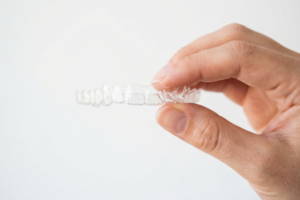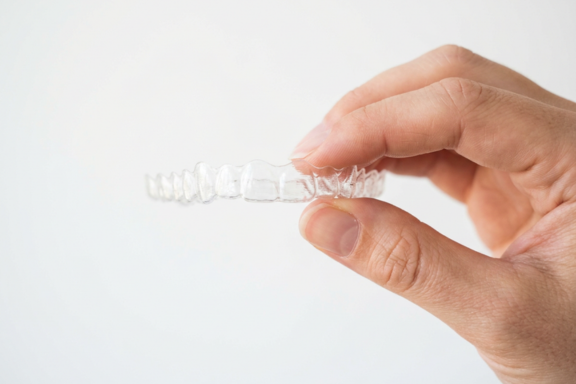
Invisalign uses a series of clear plastic trays to gradually move your teeth into the right position.
That’s the short answer. Each tray is custom-made for your teeth and moves them a tiny fraction of a millimeter. You wear each one for one to two weeks, then switch to the next. Over time — tray by tray — your teeth reach their final position.
At Aubrey Barrett Orthodontics, Invisalign is one of the most popular treatment options at both our El Cerrito and Pittsburg offices. Here’s exactly how the process works from your first appointment to your finished smile.
Step 1: Your Free Consultation
Everything starts with a consultation. Dr. Barrett examines your teeth and your bite to find out if Invisalign is the right fit for you.
Invisalign works well for most mild to moderate orthodontic issues — crowding, spacing, overbites, underbites, and crossbites. Some more complex cases respond better to traditional braces. Dr. Barrett will give you an honest recommendation based on what will actually get you the best result.
There’s no charge for the consultation and no referral needed.
Step 2: Your Digital Scan
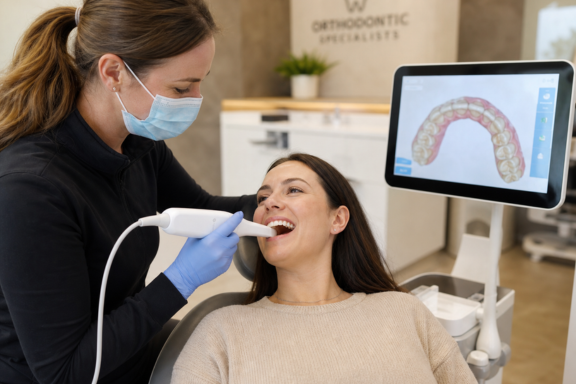
If Invisalign is a good fit, the next step is a full scan of your teeth using our iTero digital scanner.
No trays of impression material. No gagging. The scanner takes a precise 3D image of your teeth in a few minutes. You can see a digital preview of your finished smile on screen before treatment even begins.
That scan becomes the blueprint for your entire treatment plan.
Step 3: Your Custom Aligners Are Made
Your scan is sent to Invisalign’s lab, where a custom set of aligners is made specifically for your teeth. Each aligner in the series is slightly different from the last. Each one moves your teeth a little further toward the final position.
Most patients receive their full set of aligners at a single appointment. You wear through them in order.
Step 4: Wearing Your Aligners
This is the part that requires the most consistency on your end.
Wear each aligner for 20 to 22 hours a day. Take them out to eat, drink anything other than water, and brush your teeth. That’s it. The rest of the time, they stay in — including while you sleep.
When you switch to a new aligner, you’ll feel some pressure for a day or two. That’s normal. It means the tray is working. The pressure fades quickly as your teeth settle into the new position.
Step 5: Progress Check-Ins
You’ll check in with Dr. Barrett periodically throughout treatment. At Aubrey Barrett Orthodontics, we use digital monitoring technology that lets us track your progress remotely between visits. That means fewer in-office appointments than traditional braces — a meaningful difference for busy East Bay families.
Each check-in confirms your teeth are moving on schedule. If anything needs a small adjustment, we handle it quickly.
Step 6: Refinements (If Needed)
Near the end of treatment, some patients need a small additional set of aligners to fine-tune the final result. This is called a refinement, and it’s common — it doesn’t mean anything went wrong. It just means Dr. Barrett is making sure your result is exactly right before you’re done.
Step 7: Retainers
Once your teeth reach their final position, you’ll transition to retainers. Retainers are what keep your result permanent. Without them, teeth shift back over time — this is true whether you had Invisalign or braces.
Most patients wear their retainer every night long-term. It’s a small habit that protects years of treatment.
What Can Invisalign Fix?
Invisalign treats a wide range of orthodontic issues, including:
- Crowded teeth
- Overbites
- Underbites
- Gaps between teeth
- Crossbites
- Open bites
The American Association of Orthodontists recommends seeing a specialist — not a general dentist — for Invisalign treatment to ensure proper case selection and monitoring throughout.
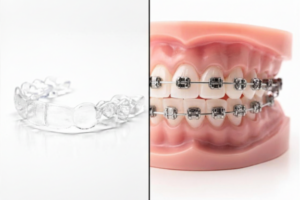
How Does Invisalign Work Compared to Braces?
Invisalign is a great fit for many patients, but not every case. Some bite corrections respond better to braces, especially more complex jaw issues. The technology and comfort are excellent — the question is always whether it’s the right tool for your specific situation.
Our full Invisalign vs. Braces comparison breaks down the differences honestly — including cost, comfort, treatment time, and which issues each one handles best.
Frequently Asked Questions
How long does Invisalign take?
Most adult cases take 12 to 18 months. Simpler cases can finish in as few as 6 months. Teen treatment timelines vary based on how much movement is needed. Dr. Barrett will give you a realistic estimate at your consultation.
Does Invisalign hurt?
There’s pressure when you switch to a new aligner — most patients describe it as mild soreness that fades after a day or two. It’s generally considered more comfortable than traditional braces.
Can I eat whatever I want with Invisalign?
Yes. Because the aligners come out, there are no food restrictions. Take them out to eat, brush your teeth, and put them back in.
How often do I have to come into the office?
Less often than with braces. Dr. Barrett uses digital monitoring technology to track your progress between visits, which reduces the number of in-person appointments you need.
Is Invisalign as effective as braces?
For most mild to moderate cases, yes. For complex bite corrections, braces may produce a more predictable result. Your orthodontist — not a general dentist — is the right person to evaluate your specific case.
What happens after Invisalign?
You move to a retention phase with retainers. Wearing your retainer consistently after treatment is what keeps your teeth in their new position long-term.
See If Invisalign Is Right for You
The best way to find out if Invisalign works for your case is to have Dr. Barrett take a look. Consultations are free, and you’ll leave with a clear answer and a realistic plan.
Schedule your free consultation at our El Cerrito or Pittsburg office. We’d love to show you what’s possible.