If your child’s dentist or orthodontist has mentioned a palate expander, you might be wondering what it is, why kids need it, and whether it’s really necessary.
You’re not alone — palate expanders are one of the most common early orthodontic treatments for kids, especially between ages 7–12.
At Aubrey Barrett Orthodontics in El Cerrito and Pittsburg, California, we use palate expanders to help growing kids develop healthier smiles, avoid future complications, and create the space their permanent teeth need.
Here’s everything you need to know — explained simply, clearly, and without the fluff.
Palate Expander Basics
| Topic | Quick Answer |
| What It Is | A device that gently widens the upper jaw. |
| Who Needs It | Kids with crowding, crossbites, narrow jaws, or airway concerns. |
| Best Age | 7–12 years old (before the palate bones fuse). |
| How Long It Takes | Turning: 2–5 weeks. Total wear: 6-9 months. |
| Does It Hurt? | Mild pressure for a few minutes; usually comfortable. |
| Benefits | Creates space, improves bite, may help breathing, reduces need for extractions. |
What Is a Palate Expander?

A palate expander is a small orthodontic device that gently widens the upper jaw (the palate).
Why would we want to widen a jaw?
Because in many kids, the upper jaw is too narrow — which can lead to:
- Crowding
- Crossbites
- Difficulty breathing
- Misaligned bites
- Narrow smiles
- Long or complicated future orthodontic treatment
By widening the upper jaw while your child is still growing, we can guide the bones into better alignment and make room for permanent teeth to come in naturally.
Why Palate Expanders Are Most Effective in Children
The palate is made of two bones that meet in the middle.
Before puberty, that connection (called the mid-palatal suture) is still soft and flexible — which means we can gently guide it to widen.
After puberty, this area becomes solid bone.
That makes expanding the palate much harder and sometimes only possible with surgery.
This is why orthodontists recommend early screening by age 7, and why expanders tend to be recommended between ages 7–12.
Common Signs Your Child May Need a Palate Expander
A palate expander isn’t for every child, but it’s very helpful in the right situations.
Your child may benefit from an expander if they have:
1. A Crossbite
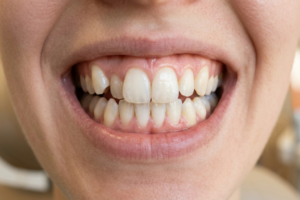
When the upper teeth bite inside the lower teeth.
This is one of the biggest reasons expanders are used.
2. Crowding
Not enough room for permanent teeth to fit properly.
3. A Narrow Smile
You may notice the upper jaw looks “pinched” or too small.
4. Mouth Breathing or Snoring
A narrow palate can impact airway development.
5. Impacted Teeth
When permanent teeth are stuck and can’t come in.
6. Early or Asymmetrical Tooth Wear
An unbalanced bite can create uneven pressure.
If you’ve noticed any of these, it’s worth getting a quick evaluation at one of our two offices.
How a Palate Expander Works (Simple Explanation)
A palate expander sits on the upper molars and has a tiny center screw.
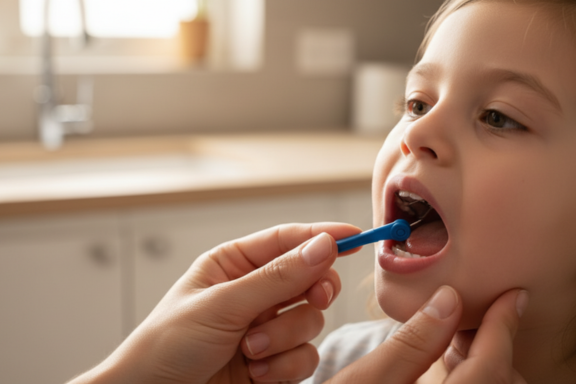
Parents (or older kids) turn the screw at home according to Dr. Barrett’s instructions.
Each turn gently moves the two halves of the palate apart by a hair’s width.
This slow, steady widening:
- Creates more space
- Improves the bite
- Can help improve breathing
- Prepares the mouth for braces or Invisalign later
Most kids wear an expander for 6–9 months, depending on their growth and needs.
Is the Palate Expander Process Painful?
Good news: it’s not painful.
Most kids say it feels like gentle pressure behind their nose or front teeth.
What parents report most often:
- Mild pressure for a few minutes after each turn
- A feeling of “stretching” behind the front teeth
- Speech sounding a little funny for 2–3 days
- Increased saliva for a few days
- Slight gap forming between front teeth (this is normal and expected)
Within a week, most kids forget they’re even wearing it.
What About Eating, Talking, and Daily Life?
Your child can eat, play, sleep, go to school, and live life normally.
A few helpful tips:
- Soft foods the first 1–2 days
- Avoid sticky/gummy foods
- Practice reading out loud to adjust speech
- Encourage good brushing around the appliance
Kids adapt incredibly quickly — often faster than parents expect.
Benefits of Palate Expanders (What Parents Care About Most)
Palate expanders are one of the most effective early orthodontic tools because they can:
1. Create Space Without Extracting Teeth
This reduces the likelihood of needing permanent teeth pulled later.
2. Improve Airway and Breathing
A wider palate can improve nasal airflow and reduce mouth breathing.
3. Prevent More Serious Problems Later
Correcting issues early often means simpler treatment as a teen.
4. Reduce or Shorten Braces Time
When the jaws are aligned early, braces or Invisalign are more efficient.
5. Boost Your Child’s Confidence
Kids love having a wide, full smile — and expanders help create that.
Parents often tell us that the “little gap” kids get between their front teeth during expansion becomes their favorite part of the journey because it shows things are working.
How Long Does a Palate Expander Stay In?
The active turning phase usually lasts 2–5 weeks.
But the expander stays in place for 6-9 months so the new bone can harden and stabilize.
Removing it too early can cause the expansion to collapse — which is why we keep it in place even after turning is complete.
What Happens After the Expander?
After expansion, your child may:
- Wait for permanent teeth to come in
- Move into limited braces
- Begin Phase 2 (teen) orthodontic treatment
- Transition to Invisalign Teen
- Continue under simple observation
Dr. Barrett will explain the next steps clearly based on your child’s growth and smile needs.
Why Families in El Cerrito & Pittsburg Choose Dr. Barrett for Palate Expanders
Parents tell us they choose Aubrey Barrett Orthodontics because:
- Dr. Barrett is gentle, patient, and great with kids
- The team explains every step in simple language
- Digital scans = no goopy impressions
- We never recommend treatment unless it’s truly needed
- Kids actually like coming back
- We’re locally owned — not a corporate chain
- Consultations are 100% free
Better yet, getting a second opinion is easy — and we’re always happy to help.
Is Your Child a Candidate for a Palate Expander?
The best way to know for sure is with a quick, easy orthodontic evaluation.
At your free consultation, you’ll get:
- A gentle digital scan
- Photos of your child’s bite
- A clear explanation of what’s going on
- Honest recommendations
- Exact costs and timeline
- Zero pressure — just answers
If your child needs a palate expander, you’ll know exactly why.
If they don’t, we’ll simply monitor their growth at no cost.
👉 Schedule your child’s free consultation at our El Cerrito or Pittsburg office today
A wider, healthier smile may be easier — and earlier — than you think.