When parents think about orthodontics, they often picture crooked teeth. But many of the most important orthodontic issues aren’t about how teeth look — they’re about how teeth and jaws fit together.
These are called bite problems, and some of them are best treated early, while your child is still growing. Others can wait until the teen years.
At Aubrey Barrett Orthodontics, we help families understand early bite problems every day.
This guide will walk you through the most common ones — overbite, underbite, and crossbite — in a simple, easy-to-understand way, so you know what to watch for and when to take action.
| Bite Type | What It Means | Why It Matters |
| Overbite | Upper teeth stick out too far | Higher risk of injury, bite imbalance |
| Underbite | Lower teeth sit in front of upper teeth | Jaw imbalance, chewing and speech issues |
| Crossbite | Upper teeth bite inside lower teeth | Jaw shifting, uneven growth |
| Can kids outgrow it? | Sometimes, but not always | Early evaluation helps decide |
| Best age to evaluate | Around age 7 | Growth can still be guided |
| Early treatment length | 6–12 months | Often simpler than waiting |
| If no treatment needed | Growth is monitored | Treatment starts at the right time |
What Is a Bite Problem?
A bite problem occurs when the upper and lower teeth don’t line up correctly when your child closes their mouth. This can affect:
- Chewing
- Speech
- Jaw growth
- Tooth wear
- Facial balance
- Long-term dental health
Some bite issues are subtle and easy to miss — especially when baby teeth are still present. Others are more noticeable but often assumed to be “something kids grow out of.”
Sometimes they do.
Sometimes they don’t.
That’s why early orthodontic evaluations are so important.

Overbite: When the Top Teeth Stick Out Too Far
An overbite happens when the upper front teeth extend too far forward over the lower teeth.
What parents may notice:
- Front teeth that stick out
- Difficulty biting into foods
- Increased risk of chipping front teeth
- Mouth breathing
- Lips that don’t rest comfortably together
While mild overbites are common and often harmless, moderate to severe overbites can increase the risk of injury and affect jaw development.
Why early treatment can help:
- Guides jaw growth while bones are still flexible
- Reduces risk of trauma to front teeth
- May shorten or simplify future orthodontic treatment
Underbite: When the Lower Teeth Sit in Front
An underbite occurs when the lower teeth sit in front of the upper teeth.
This type of bite problem is often genetic and doesn’t usually “fix itself” over time.
Signs of an underbite include:
- A lower jaw that appears prominent
- Difficulty chewing
- Speech challenges
- Jaw discomfort
- Teeth wearing unevenly
Why early treatment matters:
Underbites are much easier to guide while a child is still growing. Early orthodontic treatment may:
- Improve jaw balance
- Reduce the severity of the bite
- Help avoid surgical treatment later
Waiting too long can limit non-surgical options.
Crossbite: A Common but Often Missed Problem
A crossbite happens when one or more upper teeth bite inside the lower teeth instead of outside.
This can affect:
- Front teeth
- Back teeth
- One side of the mouth or both
Why crossbites are important:
- They can cause the jaw to shift to one side
- They may lead to uneven jaw growth
- They can wear teeth down prematurely
Crossbites are one of the most common reasons orthodontists recommend early treatment. You may have heard of a palatal expander – this is what this fixes.
Why Bite Problems Are Often Easier to Treat Early
Children’s jaws are still growing and developing — which gives orthodontists a powerful advantage.
Early treatment can:
- Guide jaw growth
- Create space for adult teeth
- Improve airway and breathing
- Prevent more complex problems later
- Reduce treatment time during the teen years
This type of early care is often called Phase 1 orthodontic treatment, and it usually lasts 6–12 months.
Does Every Child With a Bite Problem Need Early Treatment?
No — and this is important.
Some bite issues can safely be monitored, while others benefit greatly from early intervention. The key is knowing the difference.
At Aubrey Barrett Orthodontics:
- We don’t rush treatment
- We monitor growth carefully
- We recommend early care only when it truly helps
Many children simply need periodic check-ins to make sure their bite develops properly.
How Bite Problems Are Evaluated
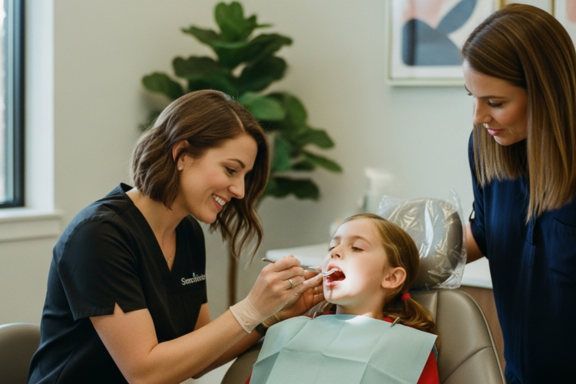
During an orthodontic consultation, Dr. Barrett evaluates:
- How the teeth fit together
- Jaw alignment and symmetry
- Growth patterns
- Spacing and crowding
- Airway considerations
Digital scans and photos allow parents to see what’s happening, which makes everything much easier to understand.
What Early Treatment Might Look Like
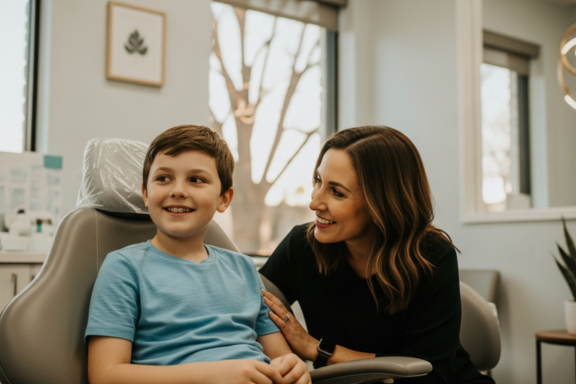
If early treatment is recommended, it may include:
- A palate expander to widen a narrow upper jaw
- Limited braces
- Growth-guiding appliances
Early treatment is typically shorter and gentler than full braces and is designed to set the stage for healthy development — not rush your child into years of orthodontics.
Early Bite Care at Aubrey Barrett Orthodontics
Families trust Aubrey Barrett Orthodontics because of our calm, educational, no-pressure approach. Dr. Barrett takes the time to explain what she sees, why it matters, and what options exist — clearly and honestly.
Parents appreciate that:
- Consultations are free
- Digital scans replace messy impressions
- Treatment is personalized
- Kids feel comfortable and supported
- Decisions are made thoughtfully, not rushed
We believe early information leads to better outcomes — whether treatment starts now or later.
Not Sure If Your Child’s Bite Is a Problem? Let’s Take a Look.
Bite issues can be hard to spot without trained eyes — and guessing isn’t helpful. The best way to know what your child needs is with a free orthodontic consultation.
You’ll receive:
- A digital scan
- Photos and bite evaluation
- Clear explanations
- Honest recommendations
- No pressure — just answers
Schedule your free consultation at our El Cerrito or Pittsburg offices:
A healthy bite supports a healthy smile — and early guidance can make all the difference.